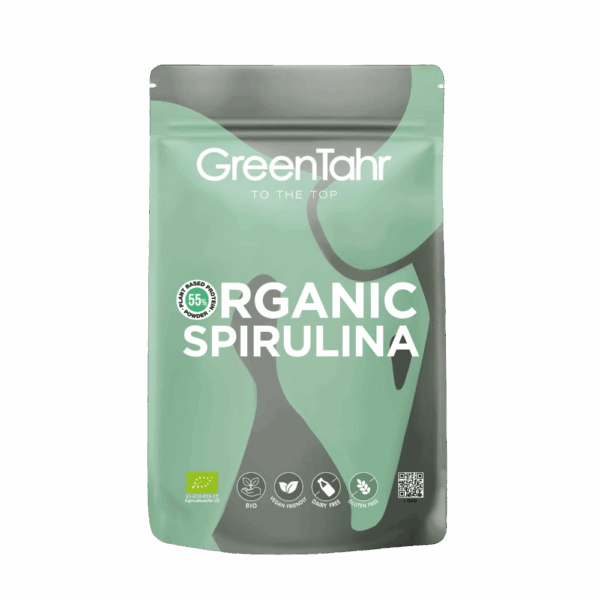
Spirulina contains around 57% protein by dry weight, notable for its excellent amino acid profile, providing all essential amino acids with high bioavailability. Its carbohydrate content ranges between 8% and 14%, mainly in the form of polysaccharides such as glucose, galactose, mannose, and ribose. Lipids account for approximately 6%, varying depending on cultivation conditions. Its low nucleic acid content makes it suitable as a supplement even for individuals predisposed to gout. It is rich in pigments such as β-carotene (provitamin A) and provides minerals including calcium, zinc, copper, phosphorus, chromium, iron, manganese, and magnesium. Particularly rich in iron, it contributes to normal cognitive function, energy metabolism, immune system function, and the reduction of tiredness and fatigue. It is also rich in thiamine (vitamin B1), which supports normal energy metabolism, nervous system function, psychological function, and heart function, and in riboflavin (vitamin B2), which contributes to normal energy metabolism, nervous system function, maintenance of mucous membranes, red blood cells, skin and vision, normal iron metabolism, protection against oxidative stress, and reduction of tiredness and fatigue.